Dr. Gymbro
←

#blood lactate

1 article
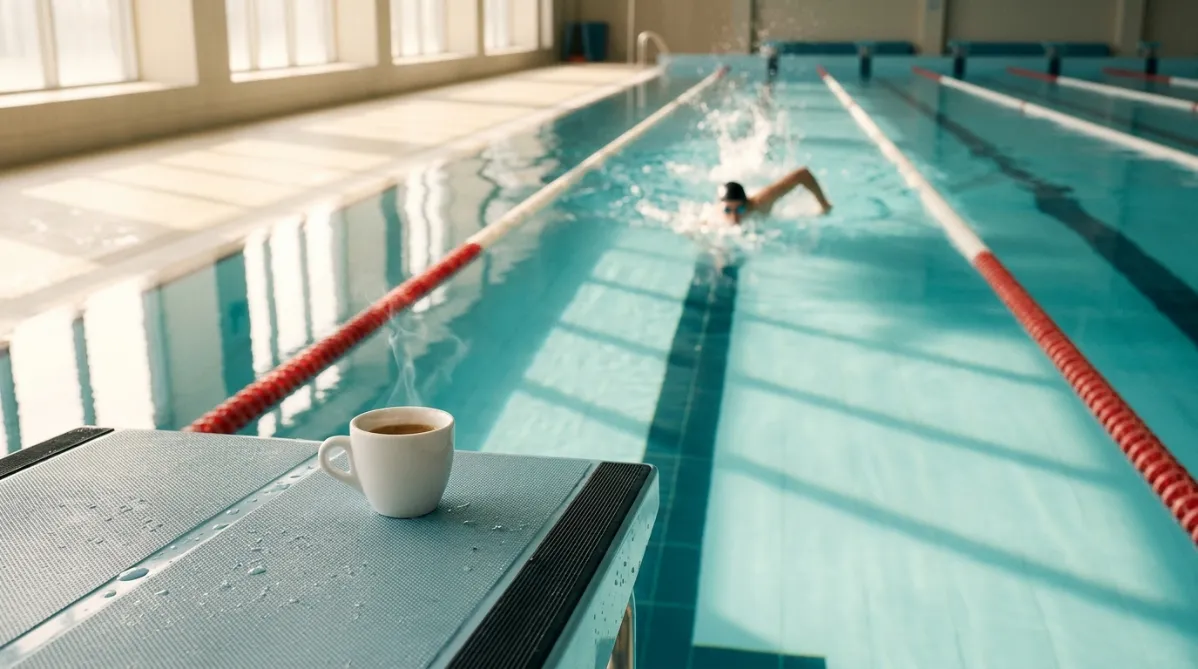
A wide, editorial-style photograph of a competition swimming pool lane seen from just above the water line at the starting end, in soft morning light. In the foreground, on the pool deck, a white ceramic espresso cup sits on the edge of a blue-gray starting block, a thin curl of steam rising from it. The cup is in crisp focus, with a few droplets of water on the textured non-slip deck around it. Behind it, the pool stretches into the distance as a series of calm lanes divided by red and white lane ropes. The turquoise water glints with gentle ripples and long, shimmering reflections. At the far end, a lone swimmer in a dark cap and goggles is mid-stroke, caught in a small burst of white splash, and slightly out of focus because of the shallow depth of field.

Large windows along the side wall let in pale golden sunlight, which throws soft diagonal light across the water and the deck. The palette is clean and modern: aqua, deep teal, warm cream and a small accent of coffee brown. The cup's warm tones stand out against the cool blues. The composition follows the rule of thirds, with the cup in the lower left third and open negative space of water and light on the right, leaving room for headline text. The look is minimal, airy and contemporary, like a high-end sports and science magazine, with subtle film grain, natural color grading, and a slightly desaturated, calm mood. Faint stopwatch-like details appear only as a thin black timing pad edge on the starting block, with no text or numbers visible. The overall feel is quiet anticipation just before a race, precise and fresh, with a sense of small margins and measured performance.
nutrition

La caféine rend les nageurs plus rapides, mais pas autant que vous le pensez

BY DR. GYMBRO ·

Les nageurs boivent du café avant les courses depuis des années, mais cela les rend‑t‑ils vraiment plus rapides ? Une nouvelle méta‑analyse multiniveau de 13 essais croisés estime le gain à environ 1,7 %, une marge décisive dans un sport où la victoire se joue à la centième de seconde. Le bénéfice le plus net apparaît à 6 mg/kg ou plus, alors que les doses plus faibles n’ont pas montré d’effet convaincant. La caféine augmente également le lactate sanguin post‑course, et les résultats varient fortement d’une étude à l’autre. Voici ce que les preuves soutiennent et ce qu’elles laissent en suspens.

This page is available in